This is an example tracing through a functions with list parameters and drawing the stack at different points in its execution.
Note that a function can modify the values stored in a list parameter
(i.e., the square_smaller function
has a side effect of possibly modify the list contents in the passed list).
Consider the following code:
1
2
3
4
5
6
7
8
9
10
11
12
13
14
15
16
17
18
19
20
21
22
23
24
25
26
27
28
def main():
l = [2, 4, 6, 7, 3, 5]
print(l)
how_many = square_smaller(l, 5)
print(l)
print("%d elments were squared" % (how_many))
#######################################
def square_smaller(nums, val):
"""
This function square any list elment that is less than the passed value.
nums: a list of numbers
val: the value to match
returns: the total number of list elements modified
side effect: squares all values in the list less than val
"""
total = 0
for i in range(len(nums)):
if (nums[i] < val):
nums[i] = nums[i]*nums[i]
total = total + 1
return total
#######################################
main()
When run, this program’s output is:
$ python test.py
[2, 4, 6, 7, 3, 5]
[4, 16, 6, 7, 9, 5]
3 elments were squared
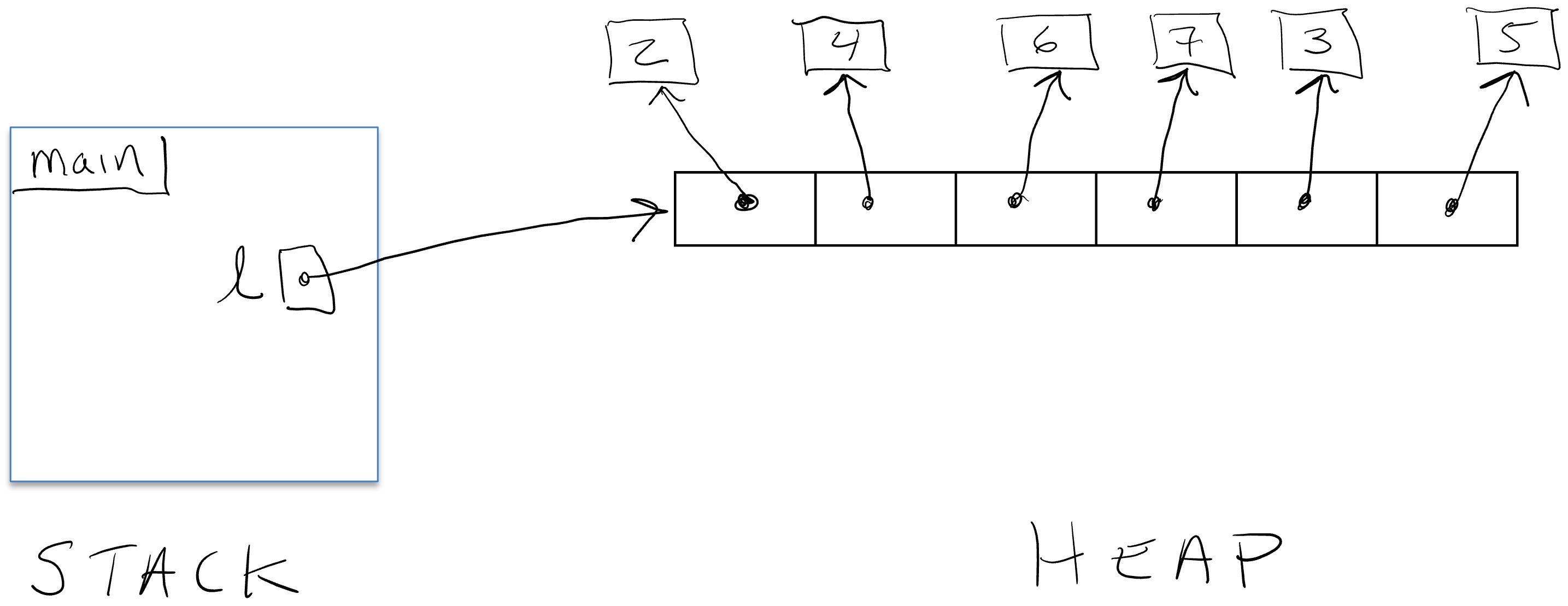
Here is a drawing of the stack from before the call to square_smaller in
main:
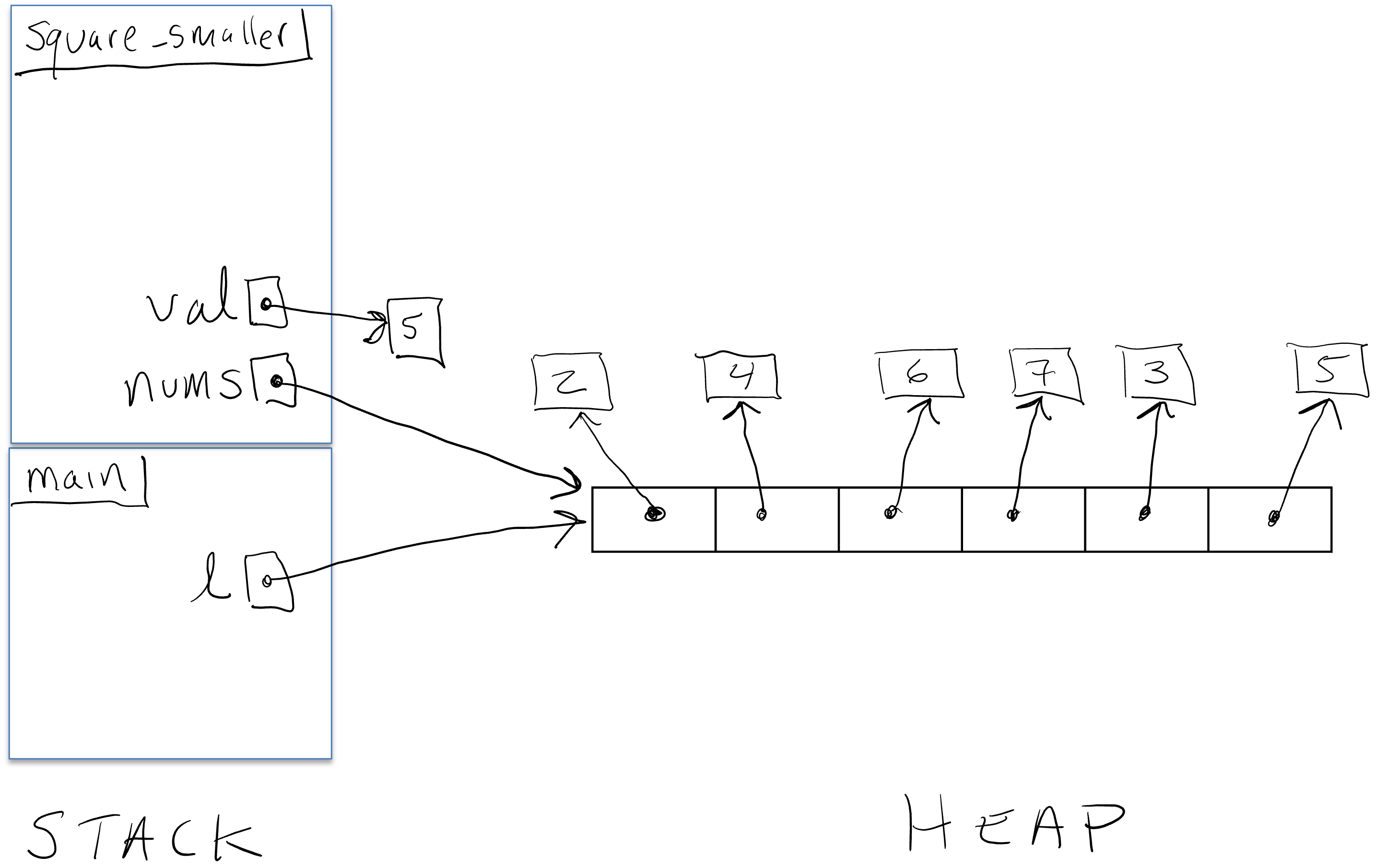
Here is a drawing of the stack at the point in the exectuion when
the square_smaller function has been called, and it is just about
to execute its first instruction (its stack frame is set-up with its
parameters getting the values of the arguments from the call in main):
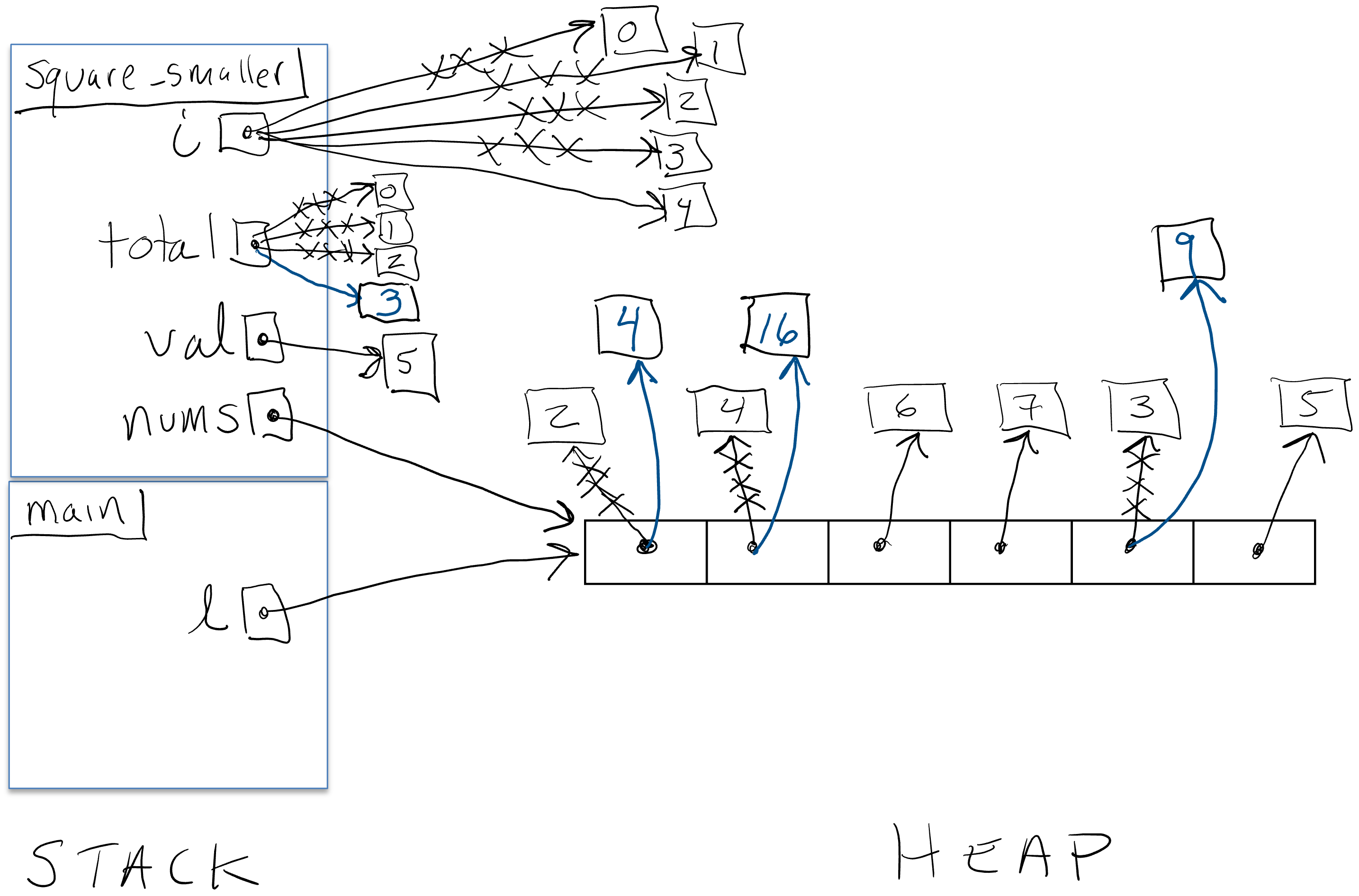
Here is a drawing of the stack at the point in the exectuion
right before the return statment in the square_smaller function:
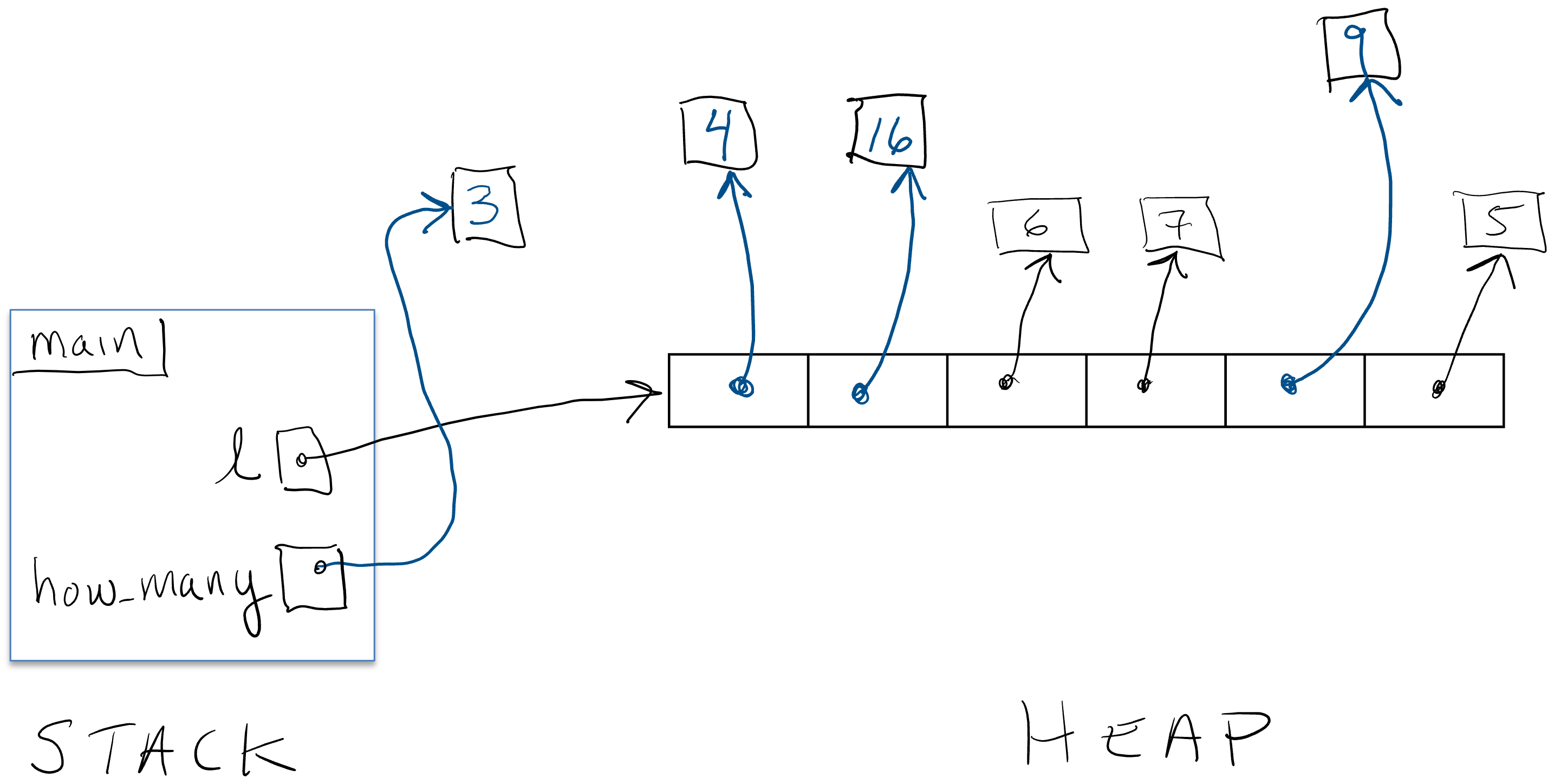
Here is a drawing of the stack after the call to square_smaller function
returns (note that the values in the list l have been modified by the
function, and the the function’s return value is assigned to main’s local
variable `how_many):